EAM Work Orders
Description:
Enterprise asset management work orders including asset and cost information
Parameters
Organization Code, Department, Asset Group, Asset Number, Scheduled Start Date From, Scheduled Start Date To, Work Order Creation Date From, Work Order Creation Date To, Work Order Status, Planner, Work Order Created By, Cost Period from Date, Cost Period to Date, Cost Detail Level
Used tables
mtl_system_items_b_kfv, eam_construction_estimates, mtl_parameters, wip_entities, wip_discrete_jobs, org_access_view, bom_departments, pa_projects_all, pa_tasks, eam_work_order_details, eam_wo_statuses_v, eam_pm_schedulings, eam_org_maint_defaults, mtl_eam_locations, csi_item_instances, mtl_categories_b_kfv, eam_failureinfo_v, wip_eam_period_balances, org_acct_periods, gl_periods, wip_eam_cost_details_v
Categories
Dependencies
If you would like to try one of these Oracle EBS SQLs without having Blitz Report installed, note that some of the reports require functions from utility package xxen_util.
Example Report
EAM Work Orders 18-Jan-2018 152946.xlsx
Report SQL
www.enginatics.com/reports/eam-work-orders/
Blitz Report™ import options
EAM Work Orders - Case Study & Technical Analysis
Executive Summary
The EAM Work Orders report provides a comprehensive view of Enterprise Asset Management (EAM) maintenance activities. It serves as a central dashboard for maintenance planners and financial analysts to monitor work order status, schedule adherence, asset performance, and associated costs. By consolidating operational data (dates, statuses, asset details) with financial data (estimated vs. actual costs), this report enables organizations to optimize maintenance schedules, control budget overruns, and improve asset reliability.
Business Challenge
Maintenance organizations often struggle with disjointed data residing in separate modules—work order management, asset tracking, and costing. This fragmentation leads to several challenges:
- Lack of Visibility: Difficulty in tracking the real-time status of maintenance jobs across different departments and assets.
- Cost Control Issues: Inability to compare estimated costs against actual expenses at the work order level, leading to budget variances.
- Scheduling Inefficiencies: Challenges in monitoring scheduled vs. actual completion dates, impacting asset availability and production uptime.
- Asset History Gaps: fragmented history of maintenance activities performed on specific assets, hindering root cause analysis for failures.
Solution
The EAM Work Orders report addresses these challenges by delivering a unified view of the maintenance lifecycle. It links work orders directly to the assets they service and provides a detailed breakdown of costs and scheduling metrics.
Key Benefits:
- Operational Insight: Tracks work orders from creation to completion, including status, priority, and assigned department.
- Financial Transparency: detailed comparison of estimated vs. actual costs for material, labor, and equipment, aggregated by period.
- Asset Management: Provides a clear history of maintenance performed on each asset, including failure codes and causes.
- Schedule Adherence: Calculates duration and highlights discrepancies between scheduled and actual dates.
Technical Architecture
The report is built on the Oracle E-Business Suite EAM and WIP (Work in Process) architecture. It primarily queries the WIP_DISCRETE_JOBS table, which stores the header information for maintenance work orders, and joins it with CSI_ITEM_INSTANCES for asset details.
Key Tables & Joins:
WIP_DISCRETE_JOBS(WDJ): The core table containing work order headers, status, dates, and class codes.CSI_ITEM_INSTANCES(CII): Links the work order to the specific asset being maintained (Asset Number, Serial Number).MTL_SYSTEM_ITEMS_B_KFV(MSIBK): Provides item details for the Asset Group and Activity.BOM_DEPARTMENTS(BD): Identifies the maintenance department responsible for the work.EAM_WORK_ORDER_DETAILS(EWOD): Stores EAM-specific attributes like shutdown type and failure information.WIP_EAM_PERIOD_BALANCES&WIP_EAM_COST_DETAILS_V: Used to retrieve period-based cost information (Actual vs. Estimated).
Parameters
The report supports a wide range of parameters to filter data for specific analysis needs:
- Organization Code: Filter by the EAM maintenance organization.
- Department: Filter by the specific maintenance department.
- Asset Group: Select work orders for a specific group of assets.
- Asset Number: Filter for a specific asset instance.
- Scheduled Start Date From/To: Range for planned start dates.
- Work Order Creation Date From/To: Range for when the work orders were created.
- Work Order Status: Filter by status (e.g., Released, Complete, On Hold).
- Planner: Filter by the assigned maintenance planner.
- Work Order Created By: Filter by the user who created the work order.
- Cost Period from Date/to Date: Define the period for cost accumulation analysis.
- Cost Detail Level: Toggle between summary or detailed cost views.
FAQ
Q: How are “Actual Costs” calculated in this report?
A: Actual costs are derived from the WIP_EAM_PERIOD_BALANCES table, summing up charges (Material, Labor, Equipment) posted to the work order within the specified cost period.
Q: Can I see work orders that are currently on hold? A: Yes, you can use the “Work Order Status” parameter to filter for specific statuses, including “On Hold” or “Pending”.
Q: Does this report include failure analysis data?
A: Yes, the report includes columns for Failure Code, Failure Description, and Cause, provided that failure information was captured on the work order.
Q: Why do some work orders show no asset number? A: Rebuildable work orders or work orders created for general maintenance activities not linked to a specific serialized asset instance might not have an asset number.
Oracle E-Business Suite Reporting Library
We provide an open source Oracle EBS SQLs as a part of operational and project implementation support toolkits for rapid Excel reports generation.
Blitz Report™ is based on Oracle EBS forms technology, and hence requires minimal training. There are no data or performance limitations since the output files are created directly from the database without going through intermediate file formats such as XML.
Blitz Report can be used as BI Publisher and Oracle Discoverer replacement tool. Standard Oracle BI Publisher and Discoverer reports can also be imported into Blitz Report for immediate output to Excel. Typically, reports can be created and version tracked within hours instead of days. The concurrent request output automatically opens upon completion without the need for re-formatting.
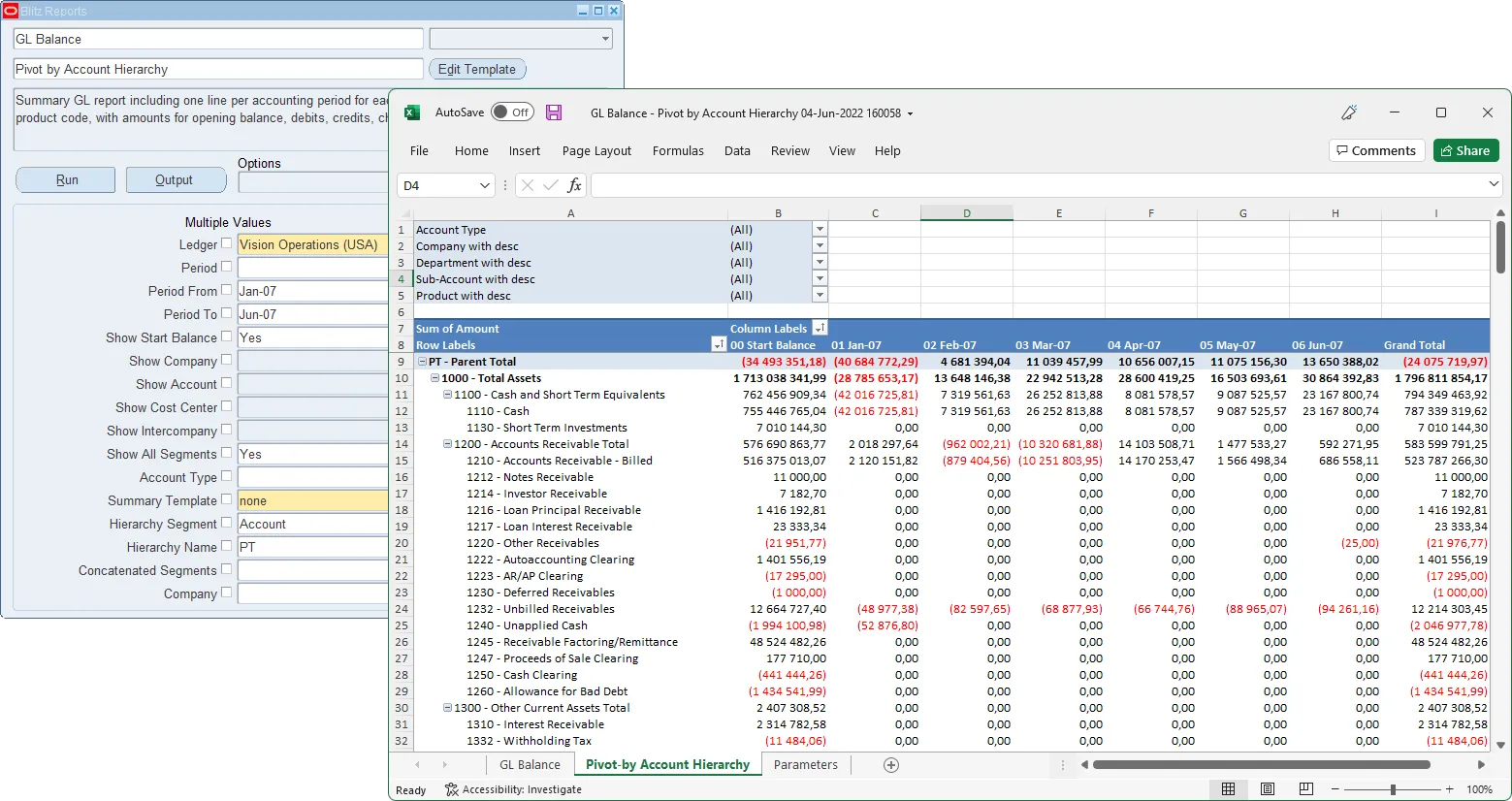
The Filters, Columns, Rows and Values fields are used to create and deliver the data in pivot table format with full drill down to details.
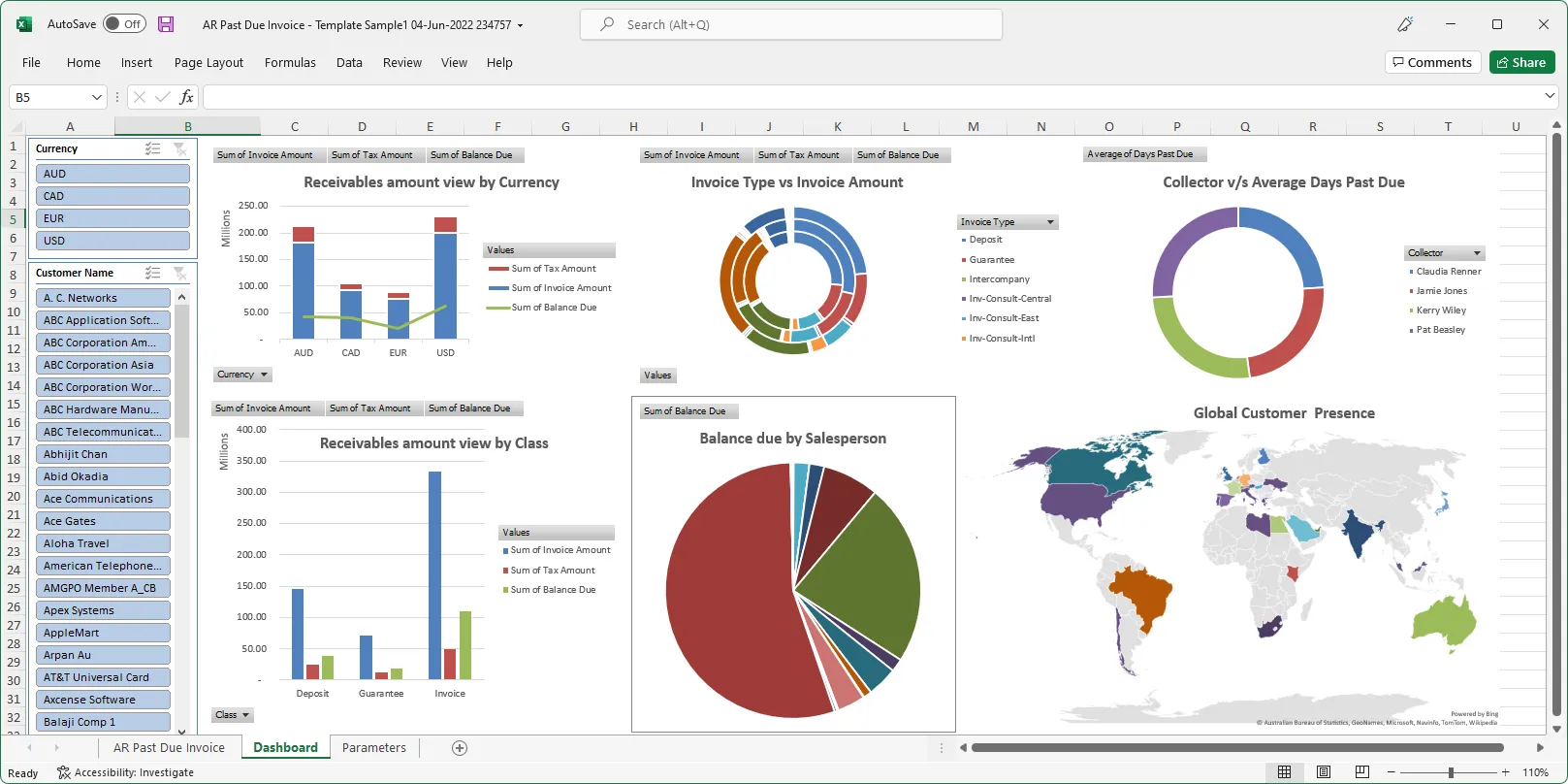
The Excel template upload functionality in Blitz Report allows users to create their own layouts by uploading an Excel template with additional sheets and charts, automatically refreshed when the report runs again. This allows to create custom dashboards and more advanced visualizations of report data.
You can download and use Blitz Report free of charge for your first 30 reports.
The installation and implementation process usually takes less than 1 hour; you can refer to our installation and user guides for specific details.
If you would like to optimize your Oracle EBS implementation and or operational reporting you can visit www.enginatics.com to review great ideas and example usage in blog. Or why not try for yourself in our demo environment.
Useful Links
Blitz Report™ – World’s fastest data upload and reporting for Oracle EBS
Oracle Discoverer replacement – importing worksheets into Blitz Report™
Blitz Report™ Questions & Answers
Supply Chain Hub by Blitz Report™
© 2025 Enginatics